
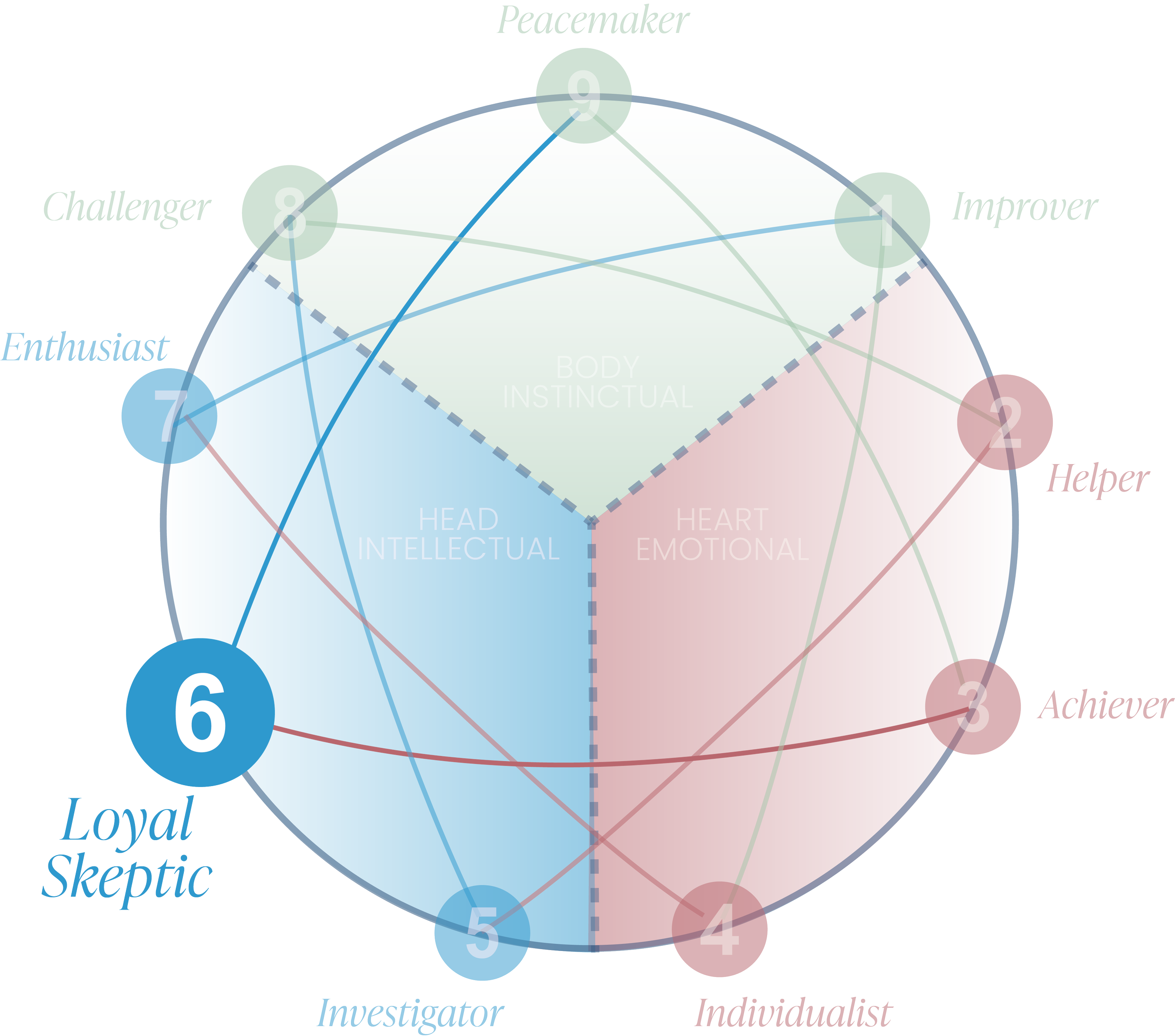
Type 6
The Loyal Skeptic/Questioner
Core Need/Motivation
Type Sixes have a need to be safe, secure, and supported in an uncertain world.
Characteristics
Type Sixes are questioning, vigilant, prepared, and supportive.
Description
Type Sixes carry an awareness that the world is not as safe as many think it is. As a result, they engage in “worst-case scenario” thinking to uncover hidden dangers. While others might interpret this as pessimism, Type Sixes aim to reach the positive, but their path involves perceiving potential threats and solving them with a plan. They do this by thinking ahead and anticipating possible future scenarios.
Having options is important to Type Sixes; having different tools available helps them to feel prepared, even if they don't need those tools for every situation. Sometimes this extensive preparedness can lead to analysis paralysis.
Because Type Sixes appreciate support, they give it to those around them. It is what they look for but don’t expect to receive from others. They tend to value a group win even if they are competitive, believing that "we are better together." A top value for this type is loyalty, and they feel strongly that dismissing people is wrong. Type Sixes value loyalty to people and to principles. They can be the ones to cling to a person or to an idea even longer than is healthy. Because they are constantly questioning, they often question authority, and they will fight and defend their beliefs even more than themselves.
Primary Center: Head/Intellectual
Sixes process the world with their head and thinking, but often lack confidence in their own process. They can feel that they are alone in a challenging and threatening world, and when overwhelmed, Sixes go to the body where they can move into fight or freeze responses.
The Gifts of Type Sixes
Type Sixes seek support so they give support to others. They are capable of surfacing threats to their family or organizations. They mitigate risks and are team players. Their value of loyalty leads them to go out of their way to support those around them.
The Challenges of Type Sixes
Type Six can get stuck in analysis paralysis. Their hyper-vigilance and tendency towards an overactive imagination can make them anxious and cause them to work from a fear-based mentality. Their worst-case thinking can be perceived as pessimism and being contrary – always playing the devil’s advocate.
Communication with Type Sixes
Type Sixes’ communication style is thoughtful, questioning, and engaging. The focus on preparation and safety may be perceived as pessimistic, contradictory, or questioning.
When relating to a Type Six, avoid ambiguity. Trustworthiness and consistency are important. Give them space to express what can go wrong and show appreciation for their attention to detail and foresight.
Thanks to Art of Growth, for core material.
-
Want to discover or refine your understanding of your type?
-
Want to know how to enhance your life and relationships using the lens of your type?
-
Curious about what this might mean for you?